

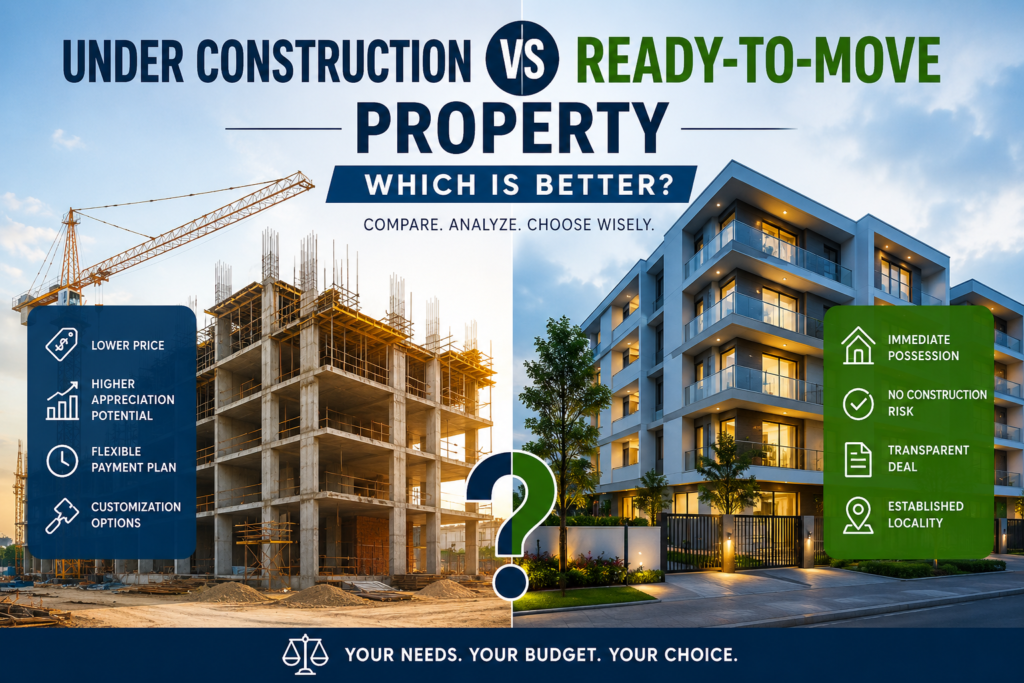
Buying a property is one of the most important financial decisions in life. Whether you are purchasing your first home or investing in real estate for future returns, selecting the right type of property plays a significant role in your long-term satisfaction and financial growth. One of the most common questions among home buyers is whether they should choose an under-construction property or invest in a ready-to-move home.
Both options offer unique advantages and come with certain challenges. The right choice depends on your budget, investment goals, financial planning, timeline, and personal preferences. While some buyers prefer the affordability and appreciation potential of under-construction projects, others value the certainty and immediate possession offered by ready-to-move properties.
Understanding the differences between these two options can help you make an informed decision and avoid costly mistakes during the buying process.
An under-construction property is a residential or commercial project that is still being developed by the builder. Buyers usually book these properties before the project is completed and receive possession after construction is finished.
Many developers launch projects in multiple phases, allowing buyers to purchase units at relatively lower prices during the early stages. The property gradually increases in value as construction progresses and surrounding infrastructure develops.
Although buying an under-construction property requires patience, it can provide attractive long-term returns when purchased from a reliable developer with a good track record.
A ready-to-move property is a completed property that is immediately available for possession. Buyers can inspect the actual apartment, villa, or house before making the purchase instead of relying on brochures or sample flats.
Since construction has already been completed, buyers can evaluate the quality of work, surrounding neighborhood, available amenities, parking facilities, security, and overall living environment before making their decision.
Ready-to-move properties are generally preferred by families planning to shift immediately without waiting for project completion.
One of the biggest differences between these two property types is pricing.
Under-construction properties are often available at comparatively lower prices during the initial stages of development. Developers may also offer flexible payment plans, launch discounts, and attractive pre-booking offers to encourage early buyers.
On the other hand, ready-to-move properties usually cost more because the construction has already been completed and buyers receive immediate possession. Since the project risk has been significantly reduced, the selling price generally reflects the completed value of the property.
Buyers should compare not only the purchase price but also registration charges, maintenance fees, GST applicability, and home loan costs before making a final decision.
The biggest advantage of a ready-to-move property is immediate possession. Buyers can move into their new home shortly after completing legal formalities and payment procedures.
In contrast, under-construction projects require buyers to wait until construction is completed. Depending on the size and stage of the project, this waiting period may range from several months to a few years.
If your family needs immediate accommodation, a ready-to-move property is usually the more practical option.
From an investment perspective, under-construction properties often provide better appreciation potential when located in developing areas with planned infrastructure projects.
As construction progresses and the neighborhood develops, property values may increase steadily. Investors purchasing during the early launch stage often benefit from this appreciation by the time possession is offered.
Ready-to-move properties also appreciate over time, especially in well-developed localities. However, since buyers purchase them at current market value, the initial appreciation margin may be comparatively lower than early-stage under-construction projects.
Investment decisions should always consider location, future infrastructure, market demand, and builder reputation rather than focusing solely on price.
Financial planning differs significantly between these two options.
Under-construction properties usually follow construction-linked payment plans where buyers pay in stages as construction progresses. This helps distribute the financial burden over a longer period.
Ready-to-move properties generally require larger payments within a shorter time frame because possession is immediate. Home loan disbursement also happens more quickly.
Buyers should carefully evaluate their income, savings, loan eligibility, and future financial commitments before selecting either option.
Although under-construction properties offer several benefits, they also involve certain risks.
Construction delays remain one of the biggest concerns. Unexpected regulatory approvals, labour shortages, financial difficulties, or market conditions may postpone project completion.
There is also the possibility that the final product may differ slightly from marketing brochures or sample flats. Therefore, buyers should carefully review project specifications before booking.
Choosing a project registered under RERA and researching the developer’s previous projects can significantly reduce these risks.
Ready-to-move properties offer greater confidence because buyers can physically inspect the property before making a purchase.
They can verify construction quality, room sizes, ventilation, natural lighting, parking facilities, security systems, and common amenities.
There is no uncertainty regarding project completion, making these properties particularly suitable for families planning immediate relocation.
Another advantage is that buyers usually avoid paying both rent and home loan EMIs simultaneously, which often happens with under-construction projects.
For first-time buyers, the decision largely depends on financial stability and urgency.
If immediate possession is important, a ready-to-move property provides greater peace of mind. Buyers know exactly what they are purchasing and can avoid waiting for project completion.
However, buyers with flexible timelines and long-term investment goals may find under-construction projects more attractive because of their lower entry prices and appreciation potential.
Before making any booking, buyers should carefully verify project approvals, legal documentation, builder credibility, payment schedules, and future infrastructure plans.
Every property purchase should be based on personal requirements rather than market trends alone.
Consider your budget, family size, job location, expected possession timeline, loan eligibility, future financial commitments, nearby infrastructure, schools, hospitals, public transportation, and long-term investment objectives.
Comparing multiple projects, visiting the project site, reviewing legal documents, and consulting experienced real estate professionals can help buyers make better-informed decisions.
There is no universal answer to whether an under-construction property or a ready-to-move property is better. Each option offers distinct advantages depending on your financial goals, lifestyle, and investment strategy.
If affordability and long-term appreciation are your priorities, an under-construction property may be a suitable choice. If immediate possession, lower project risk, and complete certainty are more important, a ready-to-move property is often the better option.
Careful research, legal verification, and thoughtful financial planning remain essential regardless of the property type you choose. Making an informed decision today can provide long-term financial security and peace of mind for years to come.
Yes, under-construction properties are often available at lower prices during the early stages of development.
A ready-to-move property is ideal for buyers who want to shift immediately after purchase.
Yes, provided the project is RERA registered, legally approved, and developed by a reputable builder with a good track record.
Under-construction properties may offer higher appreciation potential, while ready-to-move properties provide greater certainty and immediate usability.
Always verify legal documents, ownership records, RERA registration (if applicable), builder reputation, payment terms, project approvals, and the property’s location before making a purchase.

Buying a property is one of the most important financial decisions in life. Whether you are purchasing your first home or investing in real estate for future returns, selecting the right type of property plays a significant role in your long-term satisfaction and financial growth. One of the most common questions among home buyers is whether they should choose an under-construction property or invest in a ready-to-move home.
Both options offer unique advantages and come with certain challenges. The right choice depends on your budget, investment goals, financial planning, timeline, and personal preferences. While some buyers prefer the affordability and appreciation potential of under-construction projects, others value the certainty and immediate possession offered by ready-to-move properties.
Understanding the differences between these two options can help you make an informed decision and avoid costly mistakes during the buying process.
An under-construction property is a residential or commercial project that is still being developed by the builder. Buyers usually book these properties before the project is completed and receive possession after construction is finished.
Many developers launch projects in multiple phases, allowing buyers to purchase units at relatively lower prices during the early stages. The property gradually increases in value as construction progresses and surrounding infrastructure develops.
Although buying an under-construction property requires patience, it can provide attractive long-term returns when purchased from a reliable developer with a good track record.
A ready-to-move property is a completed property that is immediately available for possession. Buyers can inspect the actual apartment, villa, or house before making the purchase instead of relying on brochures or sample flats.
Since construction has already been completed, buyers can evaluate the quality of work, surrounding neighborhood, available amenities, parking facilities, security, and overall living environment before making their decision.
Ready-to-move properties are generally preferred by families planning to shift immediately without waiting for project completion.
One of the biggest differences between these two property types is pricing.
Under-construction properties are often available at comparatively lower prices during the initial stages of development. Developers may also offer flexible payment plans, launch discounts, and attractive pre-booking offers to encourage early buyers.
On the other hand, ready-to-move properties usually cost more because the construction has already been completed and buyers receive immediate possession. Since the project risk has been significantly reduced, the selling price generally reflects the completed value of the property.
Buyers should compare not only the purchase price but also registration charges, maintenance fees, GST applicability, and home loan costs before making a final decision.
The biggest advantage of a ready-to-move property is immediate possession. Buyers can move into their new home shortly after completing legal formalities and payment procedures.
In contrast, under-construction projects require buyers to wait until construction is completed. Depending on the size and stage of the project, this waiting period may range from several months to a few years.
If your family needs immediate accommodation, a ready-to-move property is usually the more practical option.
From an investment perspective, under-construction properties often provide better appreciation potential when located in developing areas with planned infrastructure projects.
As construction progresses and the neighborhood develops, property values may increase steadily. Investors purchasing during the early launch stage often benefit from this appreciation by the time possession is offered.
Ready-to-move properties also appreciate over time, especially in well-developed localities. However, since buyers purchase them at current market value, the initial appreciation margin may be comparatively lower than early-stage under-construction projects.
Investment decisions should always consider location, future infrastructure, market demand, and builder reputation rather than focusing solely on price.
Financial planning differs significantly between these two options.
Under-construction properties usually follow construction-linked payment plans where buyers pay in stages as construction progresses. This helps distribute the financial burden over a longer period.
Ready-to-move properties generally require larger payments within a shorter time frame because possession is immediate. Home loan disbursement also happens more quickly.
Buyers should carefully evaluate their income, savings, loan eligibility, and future financial commitments before selecting either option.
Although under-construction properties offer several benefits, they also involve certain risks.
Construction delays remain one of the biggest concerns. Unexpected regulatory approvals, labour shortages, financial difficulties, or market conditions may postpone project completion.
There is also the possibility that the final product may differ slightly from marketing brochures or sample flats. Therefore, buyers should carefully review project specifications before booking.
Choosing a project registered under RERA and researching the developer’s previous projects can significantly reduce these risks.
Ready-to-move properties offer greater confidence because buyers can physically inspect the property before making a purchase.
They can verify construction quality, room sizes, ventilation, natural lighting, parking facilities, security systems, and common amenities.
There is no uncertainty regarding project completion, making these properties particularly suitable for families planning immediate relocation.
Another advantage is that buyers usually avoid paying both rent and home loan EMIs simultaneously, which often happens with under-construction projects.
For first-time buyers, the decision largely depends on financial stability and urgency.
If immediate possession is important, a ready-to-move property provides greater peace of mind. Buyers know exactly what they are purchasing and can avoid waiting for project completion.
However, buyers with flexible timelines and long-term investment goals may find under-construction projects more attractive because of their lower entry prices and appreciation potential.
Before making any booking, buyers should carefully verify project approvals, legal documentation, builder credibility, payment schedules, and future infrastructure plans.
Every property purchase should be based on personal requirements rather than market trends alone.
Consider your budget, family size, job location, expected possession timeline, loan eligibility, future financial commitments, nearby infrastructure, schools, hospitals, public transportation, and long-term investment objectives.
Comparing multiple projects, visiting the project site, reviewing legal documents, and consulting experienced real estate professionals can help buyers make better-informed decisions.
There is no universal answer to whether an under-construction property or a ready-to-move property is better. Each option offers distinct advantages depending on your financial goals, lifestyle, and investment strategy.
If affordability and long-term appreciation are your priorities, an under-construction property may be a suitable choice. If immediate possession, lower project risk, and complete certainty are more important, a ready-to-move property is often the better option.
Careful research, legal verification, and thoughtful financial planning remain essential regardless of the property type you choose. Making an informed decision today can provide long-term financial security and peace of mind for years to come.
Yes, under-construction properties are often available at lower prices during the early stages of development.
A ready-to-move property is ideal for buyers who want to shift immediately after purchase.
Yes, provided the project is RERA registered, legally approved, and developed by a reputable builder with a good track record.
Under-construction properties may offer higher appreciation potential, while ready-to-move properties provide greater certainty and immediate usability.
Always verify legal documents, ownership records, RERA registration (if applicable), builder reputation, payment terms, project approvals, and the property’s location before making a purchase.